What are Different Types of Depression?
It cannot be overstated: Depression is not merely the feeling of sadness. Actually, depression is a mental health disorder that can come in various forms and in differing degrees of severity. The first step toward getting effective treatment is determining the specific type of depression, and then treating accordingly. The most common types of depression are:
Major Depressive Disorder
For those who feel depressed most of the time, or for most days out of the week, major depressive disorder is a common diagnosis—and one that can often be treated with individual and group therapies.
Persistent Depressive Disorder (Dysthymia)
This condition refers to a depression that may be more mild in its effect, but long-lasting; often, it persists for years.
The Connection Between Depression and Substance Use
Substance use disorders are common among those who experience symptoms of depression—and as with most co-occurring disorders the connection is a complex one. Both depression and substance use disorders have roots in brain chemistry, and the same brain vulnerabilities that sometimes contribute to depression, can contribute to substance use. Self-medication is another concern. Those with severe depression may turn to substances like alcohol and/or other substances to help numb their pain or mitigate their sadness. This is a vicious cycle though. For instance, alcohol is a central nervous system depressant, and substance use can actually deepen symptoms like lethargy, sadness and despair. For those experiencing co-occurring disorders, such as depression and substance use, dual diagnosis care is a recommended way to ensure the root of the issue is treated.
Depression Statistics in America
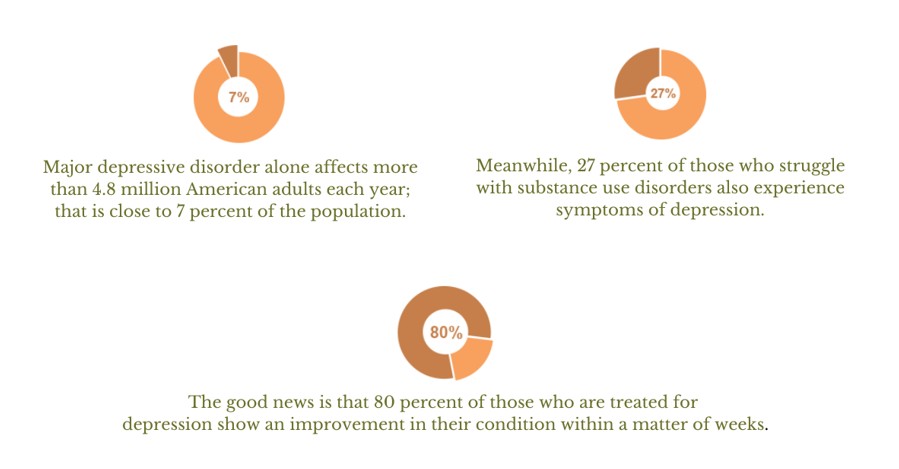
Depression is an all-too-common occurrence in the United States, affecting people of all ages, backgrounds and lifestyles. Consider some of the statistics concerning depression in America:
How to Cope with Depression
Those who experience symptoms of depression often struggle to make changes or tackle the challenges they face; that is no reason to panic, or to feel inadequate or weak. Hopelessness is a symptom of depression, not a personal failing. The important thing is to ask someone for help—to reach out to a friend or loved one for support. There are also some key lifestyle changes to make—including finding healthy outlets for stress management, prioritizing good nutrition and regular sleep, and building positive, healthy relationships. Seeking integrated dual diagnosis treatment at WestBridge can also be a key step in the road to recovery.
How to Help a Friend or Loved One with Depression
Do you have a friend or loved one struggling with depression? It is important to remember that your friend or loved one who is dealing with depression may feel helpless or unable to make positive changes. Reaching out with compassion, care and encouragement can make a whole world of difference. Remember that what someone with depression needs is a support system, people to offer unconditional love, and to urge them to seek professional treatment and care. If you have a friend or loved one struggling with symptoms of depression, contact WestBridge to learn more about the programs we offer.
WestBridge Provides Treatment for Depression and Co-occurring Substance Use Disorders
The important thing to understand about depression is that it is not just a “feeling” or a period of sadness. Depression is a true mental health disorder, and in many cases, it co-occurs with other serious disorders, including substance use. These co-occurring disorders are not typically issues that can be resolved without compassionate, clinical care. We offer integrated dual diagnosis care that gets to the root of the problem. Our evidence-based approach gets results, and helps our participants find their way to lifelong healing and recovery. If you or someone you know is struggling with depression, take the first step toward hope today by contacting WestBridge.
WestBridge provides evidence-based treatment for adults and their families experiencing mental illness with or without substance use. Contact admissions for inquiries and questions.